Industry: Carbon Capture and Helium

  • 2026 Edition – Carbon-Related Conferences

    2026 Edition – Carbon-Related Conferences

    Summary

    In the rapidly evolving landscape of sustainability and carbon reduction, staying ahead of the curve is crucial. CANUSA EPC has curated a list of 2026 carbon-related events, conferences, and tradeshows across Canada & the USA.

    Each event has been selected for its networking opportunities, panels of leading experts, and discovering cutting-edge solutions. Whether you’re a seasoned professional or just beginning your journey in the field of carbon reduction, this e-book will help you determine which event(s) you may want to attend this year. Download now and let the team at CANUSA EPC know which ones you’re attending!

    This carbon-related conferences guide includes:

    • 9 events across Canada & USA
    • Event Summaries
    • Direct Links to Agendas
  • 2025 Carbon Capture and Injection Update – Market Developments

    2025 Carbon Capture and Injection Update – Market Developments

    Summary

    Download the presentation from CANUSA EPC’s 2025 Carbon Capture and Injection Update – Market Developments. The conference incorporated new regulations, supply chain uses for CO2, and technology development for new separation processes.

    Our presentation provided insights to the follow CO2 injection trend:

    • Saturated CO2 processing
    • Cost models for CO2 injection
    • Execution strategies for commercial success
    • Future drivers of CO2 injection project
  • Drivers of CO2 Dehydration

    Drivers of CO2 Dehydration

    Summary

    Concerned about water saturated CO2 causing reliability and integrity issues? Trying to determine the right dehydration technology for your CO2 injection project? Download the presentation CANUSA EPC’s Tevin Champagne delivered at the GPA Midstream 2025 Technical Conference.

    Content includes:

    • Understanding dehydration
    • Carbon capture process
    • Traditional dehydration approaches – TEG, chillers, DEXPro & others
    • Comparing dehydration technologies – reliability, CAPEX, OPEX, water content & environmental impact
  • CO2 Liquefaction Process

    CO2 Liquefaction Process

    The Challenge

    The client specialized in the development and commercialization of proprietary technologies relating to CO2 Capture & Storage (CCS) and desired to build a modular CO2 Capture System for research and industrial purposes. It was requested to provide engineering services to complete the CO2 Liquefaction design of a CO2 Capture Plant at capacities of 30 MTPD and 100 MPTD. The CO2 Capture Plant was tied into the exhaust stack of a Once Through Steam Generator (OTSG) in an oil production facility.

    The Solution

    Engineering:

    • Balance of Plant design with available and proven technologies
      • Separation & compression
      • Dehydration & purification
      • Refrigeration
      • Storage & loading
      • Power package & utilities
      • Stainless & carbon steel materials
    • Modularized equipment

    Operations:

    • Seamless integration of CO2 liquefaction and CO2 capture plant
    • Onsite storage of 300 MTPD of liquified CO2
    • Dedicated liquid CO2 loading station for truck-out via third-party

    The Capability

    • Processing of 99% CO2 and 1 % H2O with impurities
    • Production of ISBT Standards for beverage-grade CO2
    • TIC of $5MM for 30 MTPD and TIC of $8MM for 100 MTPD
  • CO2 Enhanced Oil Recovery

    CO2 Enhanced Oil Recovery

    The Challenge

    Carbon Dioxide is a proven solvent that is used to provide incremental oil production in Cold Heavy Oil Wells with Sand (CHOPS). Upstream clients use this type of Enhanced Oil Recovery (EOR) for incremental production from Brownfield areas and often need to increase CO2 supply for the EOR production program as it matures.

    The Solution

    Engineering:

    • Providing engineering support for upgrades to the following assets
    • Develop templates and standardized designs for repeatable areas of the project
      • Process Flow
      • Materials
      • Instrumentation
      • Equipment
      • Process Modules

    Operations:

    • Design system upgrades to support integrated production and gathering
    • Communication of Well Pads to the Central Processing Facility
    • Supported compressor optimization efforts of existing assets
    • Monitor reservoir leakage and CO2 Sequestration through observer wells

    The Capability

    • Capacity of 340 MTPD CO2 injection across 8 wells for a TIC of $21MM
    • Expansion capacity to add 710 MTPD CO2 injection across 12 wells for a TIC of $14MM
    • CO2 product improves well performance
  • Dehydration Study for CO2

    Dehydration Study for CO2

    The Challenge

    Our client was facing several challenges related to the selection of dehydration technology downstream of an existing Amine Plant. The existing setup could not meet the stringent water content requirements, which was critical for the longevity of their infrastructure and the efficiency of the CO2 injection process. Their goal was to reduce the water content in their gas stream to 25 LB/MMSCF. Excess water in the system posed significant risks, including potential corrosion, hydrate formation, and inefficiencies in the CO2 injection, which could lead to operational disruptions and increased maintenance costs; so, technology selection was vital.

    The Solution

    CANUSA EPC conducted a comprehensive dehy technology study involving a detailed analysis of the specific operational needs of the client’s CO2 injection process, as well as the unique gas composition.

    Several dehy technologies were evaluated, assessing each option based on key factors like cost, operability, risks and scalability. Technologies included: glycol dehydration, desiccant systems, and membrane technologies.

    Cost Analysis:

    Detailed breakdown of the CapEx and OpEx associated with each technology – provided clarity to the upfront costs but also the long-term expenses and maintenance requirements.

    Risk Assessment:

    Safety, reliability, and potential disruptions to the CO2 injection process. Water content control is critical in preventing hydrates and corrosion, so the risks of failing to meet the target of 25 LB/MMSCF were a major consideration.

    Operability:

    Focused on minimizing the need for extensive retraining or complicated maintenance procedures. We prioritized technologies that would be easy to integrate with their existing systems and infrastructure.

    Future Scalability

    Assessing the ability to scale was crucial – the client wanted to avoid future bottlenecks/overhauls with any future operational expansion.

    The Results

    • Summarized detailed findings and technology options – one in particular would reliably achieve the client’s target of 25 LB/MMSCF (majority of technologies could only achieve ~50 LB/MMSCF, double the desired goal).
    • Report provided clarity and transparency of technology options.
    • Solution offered a balance of performance, cost-effectiveness, and future expandability.
    • Reduced risk of operational failures and ensuring confident project execution.
  • CO2 Metal Organic Framework

    CO2 Metal Organic Framework

    The Challenge

    Testing of new technologies for capturing CO2 requires the design of the capture facility and alignment with the marketing of the CO2. A developing proprietary process is rapid cycle Temperature Swing Adsorption (TSA) systems using advanced structured adsorbents that can produce a high-purity CO2 stream. The CO2 can be pipelined for use in Enhanced Oil Recovery (EOR) production programs or utilized by CO2 consumers. The goal of pilot facilities is to demonstrate the performance and operational requirements to deploy this new technology.

    The Solution

    Combustion gas streams can consist of 10% CO2, 18% H2O, 70% N2, and 2% O2 with impurities

    • Execute the detailed design based on the supplied Process Design Basis
      • Plot plan & P&ID development
      • Civil designs & pile foundations
      • Structural steel & skids
      • Electrical, Instrumentation & Controls
      • Procurement
      • Pipeline route maps
      • Locate all TSA system tie-ins
      • Evaluate utilities
        • Instrument air & fuel gas
        • Feed & wastewater
        • Power loads
      • Design and commission control system with data acquisition and storage
    • Generate Standard Operating Procedures for normal, controlled, and emergency modes of operations and shutdowns

    The Capability

    • TSA systems can capture 30 MTPD of CO2 with recovery and purity of 90%
    • TIC of $18MM for installation of the TSA system
    • Demonstrate performance and operational results from lab to pilot scale
    • Optimize CO2 recovery using different adsorbents
  • Helium Tolling Expansion

    Helium Tolling Expansion

    The Challenge

    Our client was developing a helium basin and needed to process the raw gas production at a central facility to concentrations of 95% or better to meet tolling contracts. The project required the facility to be expanded to handle a doubling of raw helium production to 4 MMSCFD. The client required expandable trailer filling capacity as the field developed to meet product takeaway. The project timeline incorporated a phased build approach to meet current processing needs and future expansion plans.

    The Solution

    CANUSA EPC visited the site to review the current facility capabilities and worked with a technology provided to expand the front-end membrane capacity.  Loadout for the additional capacity was executed by expanding the number of Bauer compressors to fill additional trailers.

    Provided process and mechanical design to increase the inlet capacity of the system

    • Raw inlet gas treatment design to remove water and meet dew point for separation
    • Membrane package specification, evaluation, and procurement to meet required helium purity
    • Future membrane series deployment for enhanced throughput at the lowest cost solution

    Evaluation of utility needs

    • Developed an electrical design package that could utilize the existing onsite power
    • Identified limits to the current site transformer for expansion

    Vendor evaluation and support for procurement

    • Managed vendor design deliverables to determine the balance of plant requirements
    • Evaluated commercial offerings to provide recommendations that aligned with the Client’s needs

    The Results

    Provided project designs that allowed for expansion of the facility as wellhead gas production increased

    • Scalable solution for the addition of future membranes, without large upfront capital costs
    • Confirmed utility requirements, avoiding the need to invest in additional utility scope and costs
    • Leverage technology vendor’s expertise on membranes to meet the Client’s requirements
  • CO2 Removal from Helium

    CO2 Removal from Helium

    The Challenge

    ANUSA EPC was tasked with evaluating cost-effective methods of removing CO2 and heavy hydrocarbons from the raw helium production gas of an existing helium polishing plant. Due to unusually high concentrations of contaminants, the plant was unable to achieve its target helium purity at the facility’s nameplate capacity. Operational difficulties were forcing the plant to run below its rated capacity, leading to lost revenue.

    The Solution

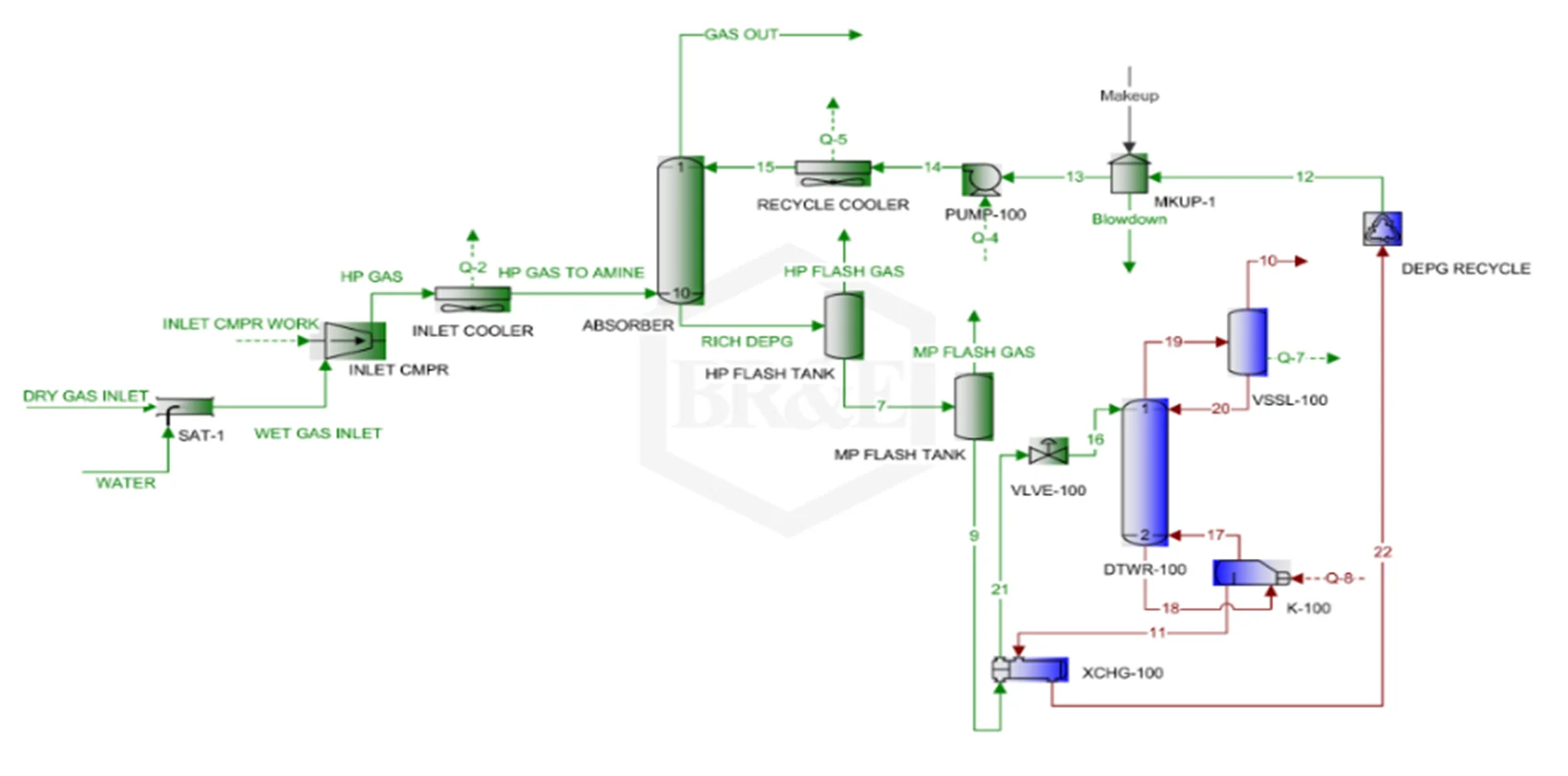
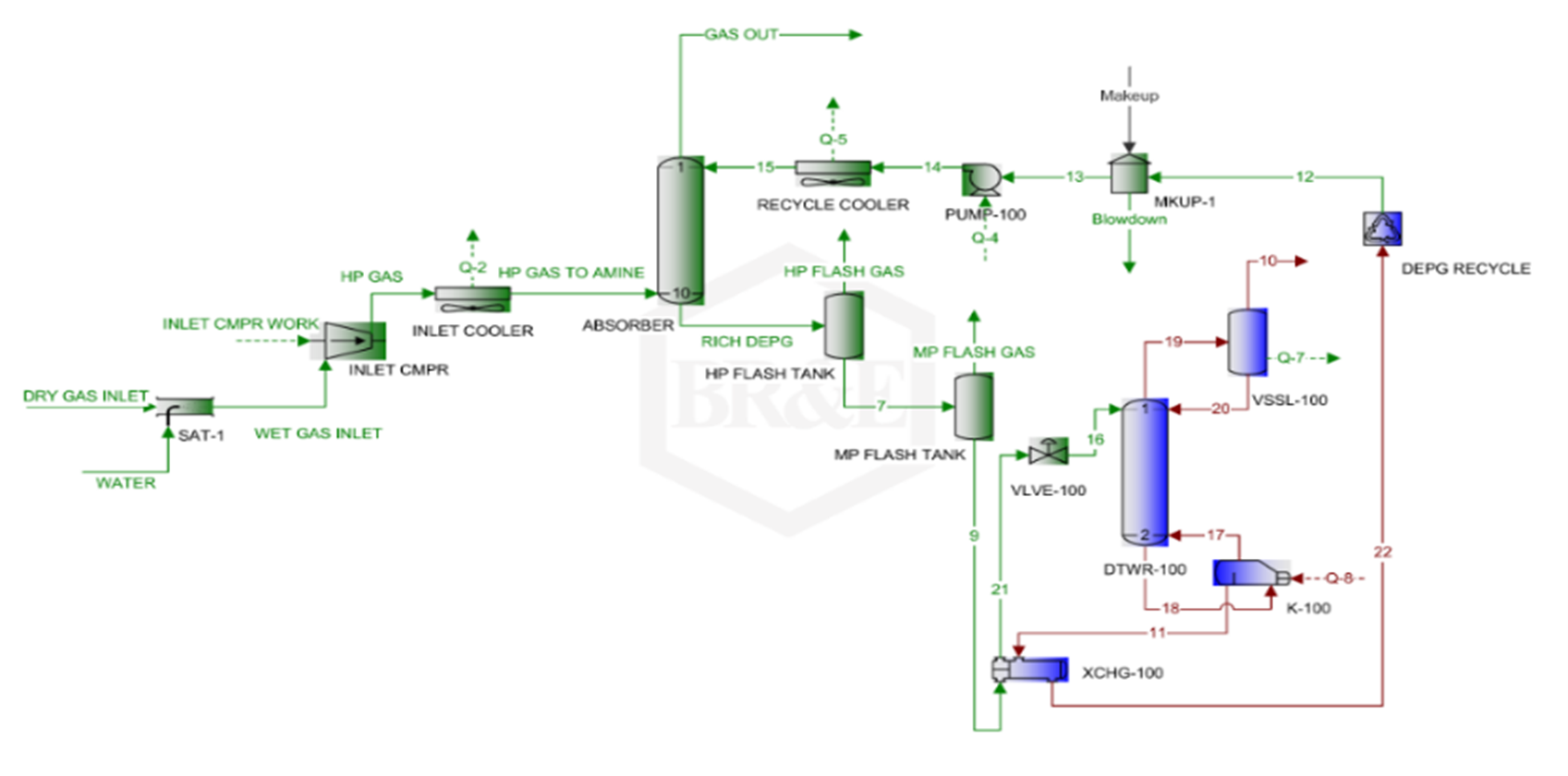
    CANUSA EPC conducted a FEED study to evaluate several different options to remove contaminants while minimizing helium losses and plant downtime.

    • Process models built in ProMax based on helium gas analysis and operating conditions
      • Modeled the efficiencies of chemical solvents for CO2 removal in an amine absorber
      • Modeled solvent regeneration power load of all options
      • Modeled inlet compression to optimize containment removal
    • Chemical solvent evaluation
      • Evaluated feasibility of chemical solvents, physical solvents, membranes, desiccant adsorbents, and charcoal filters for contaminant removal
      • Contacted vendors for level-four cost estimates and lead times
    • Evaluated OPEX changes
      • Evaluated options for lowering OPEX by utilizing hydrocarbon contaminants for heat generation
      • Considered opportunities to lower OPEX and increase equipment efficiency by utilizing heat exchangers

    Result: Higher Rates Of Recovery Of Helium

    • We provided results of advantages/disadvantages of options considered
      • Included vendor data and special considerations
      • Provided Class IV CAPEX and OPEX for all evaluated options
      • Provided projected schedule for development
    • Solution pursued by the client would reduce PSA cycles, leading to a higher rate of recovery of Helium
  • Multi-well Helium Purification Battery

    Multi-well Helium Purification Battery

    The Challenge

    The client wanted a processing facility to be built where a raw gas inlet from four wells would be separated into a helium product with a 99.9+% purity, with future expansion in mind. A few of the challenges the client faced included the implementation of multiple wells into the facility, a desire for a portable system, and the need to generate power onsite with no fuel sources readily available.

    The Solution

    CANUSA EPC first engaged by performing an initial FEED study to identify what the scope of the project would need to be, and what would be required to make the client’s requests possible. After the FEED study, we provided full-service EPCM support.

    • Project management
    • Procurement & expediting of equipment
    • Facility process design & engineering
    • PHA & safety analysis
    • Facility 3D Modeling, piping & instrument design
    • Power generation & distribution
    • Grading plan & pile layout
    • Structural design & engineering
    • Major equipment factory acceptance testing
    • Controls programming support
    • Construction support

    The Results

    Capacity & Purity

    • Facility provides 5 MMSCFD inlet capacity and sales product purity of up to 99.996% helium, or grade H4.6 helium utilizing a PSA system.

    Portable Capability

    •  Fully-skidded, mobile equipment in sea-can structure allows the Client to reuse and relocate the facility wherever it is needed.

    Power Generation

    • Onsite power was generated with a compressed natural gas service while a renewable energy system was constructed.