Explore how surging U.S. electricity demand and record-breaking capacity market signals, like PJM’s $67 billion wake-up call, are reshaping the next generation of industrial energy infrastructure projects across North America. Examine key projects developing behind the meter facility and utility projects and the market forces driving unprecedented investment in onsite power generation, natural gas processing, and energy facility development. The Energy by Design presentation delivers actionable insights for energy professionals navigating the evolving power landscape.
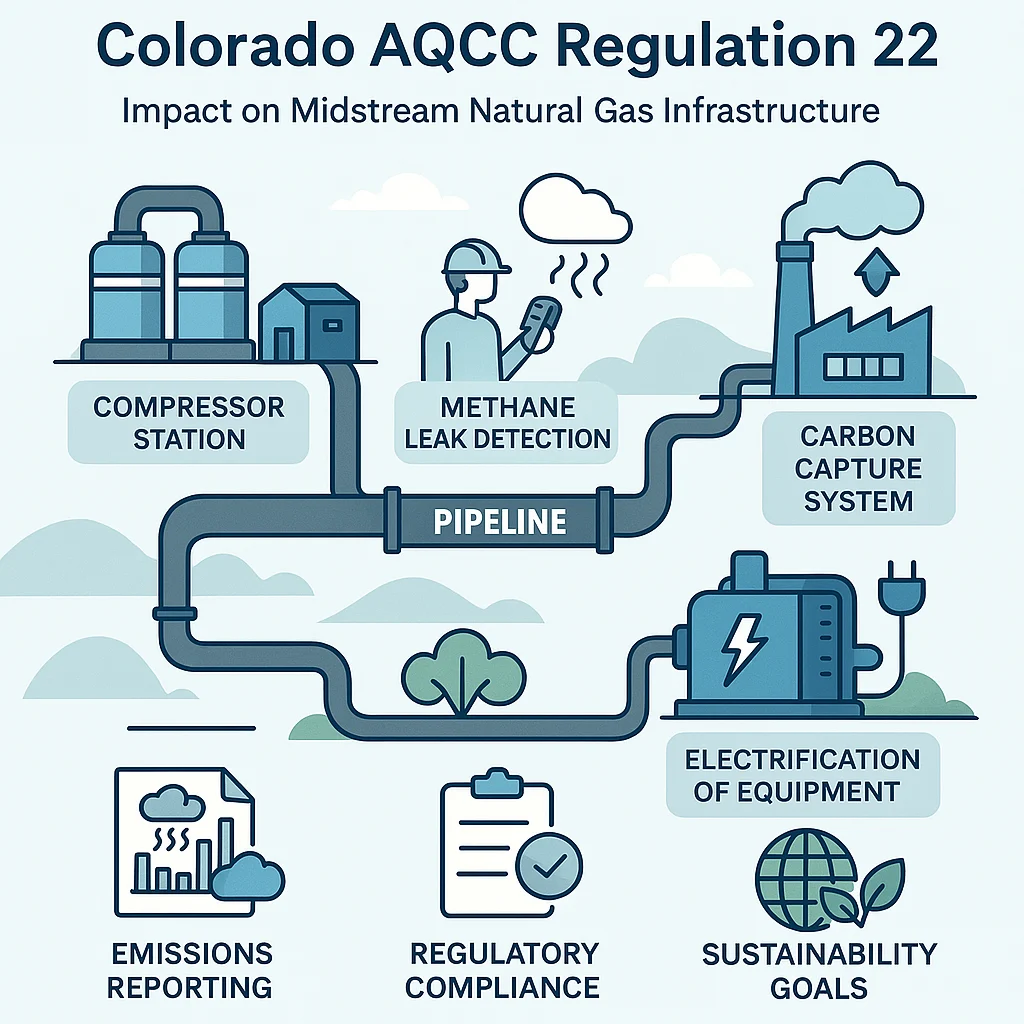
As Colorado increases its efforts to combat climate change, the regulatory landscape for industrial operators (particularly in the natural gas processing plant and gathering system sectors) is evolving rapidly. The latest development, Colorado Air Quality Control Commission (AQCC) Regulation 22, introduces stringent greenhouse gas (GHG) reporting and reduction mandates that will significantly impact how midstream infrastructure is designed, operated, and maintained.
Understanding Regulation 22
Regulation 22, formally titled Colorado Greenhouse Gas Reporting and Emission Reduction Requirements (5 CCR 1001-26), establishes a comprehensive framework for monitoring, reporting, and ultimately reducing GHG emissions across multiple sectors of the state’s economy. For midstream operators (those responsible for gathering systems, natural gas processing plants, and transportation), this regulation will require balancing the development needs of producers and the emissions caps related to GHGs.
The rule mandates that Annual GHG reporting will be required for facilities that emit over 25,000 metric tons of CO₂e per year, as well as multiple sources if they fall below the federal reporting thresholds (e.g., the 25,000 metric ton CO₂e threshold under EPA’s 40 CFR Part 98).
Emission reduction targets are aligned with Colorado’s broader climate goals: a 26% reduction by 2025, 50% by 2030, and 90% by 2050 (from 2005 levels) established under HB 19-1261.
On February 14, 2025, regulatory provisions became effective requiring every midstream company to participate in the emissions reduction program. They must achieve a collective midstream segment cap of 3,930,228 metric tons CO₂e by December 31, 2030, and maintain company-specific caps annually thereafter.
Implications for Midstream Project Development
From a project development perspective, Regulation 22, which was adopted in October 2024 and went into effect in early 2025, requires a paradigm shift. No longer can emissions be an afterthought. GHG emission reduction and methane reduction must be embedded from the earliest stages of project planning.
Here’s what midstream developers will need to consider with their emissions planning:
Carbon Footprint Assessments for New and Existing Assets
Developers must evaluate the lifecycle emissions of both current and planned infrastructure. This includes emissions from:
Compressors and natural gas processing plants
Fugitive methane leaks from gathering systems and pipelines
Combustion sources such as flares and engines
Integrating carbon modeling tools into the front-end engineering design (FEED) process is now essential to determine how overall emissions levels will be impacted for the operator. The company-specific emissions caps are calculated using each operator’s 2021 MFCE GHG emissions. October 2025 will require reporting under this program.
Technology Integration for Emission Reduction at Existing Assets
To meet reduction targets, midstream operators will consider solutions to lower the overall GHG emissions:
Electrification of engines at compressor stations and natural gas processing plants
Deployment of low-bleed or zero-bleed pneumatic devices
Advanced leak detection and repair (LDAR) programs
Carbon capture and storage (CCS) feasibility for large emitters
Operators will expect to see increased CapEx costs for compliance with marginal increases in processing capacity. Some assets may be consolidated and decommissioned before the planned end of useful life. Client will focus on reducing their methane emissions first, considered 25 times more potent than CO2 emissions. CANUSA EPC has various solutions documented for ideas, check out a novel capture application for Turbine Seal Gas Capture.
Regulatory Compliance Strategy
Operators must establish robust compliance systems that include:
Real-time emissions monitoring
Accurate data collection and reporting mechanisms
Internal audits and third-party verification
Failure to comply could result in penalties and reputational damage, especially as public scrutiny of fossil fuel infrastructure intensifies.
Civil penalties for midstream operators, under C.R.S. § 25-7-122, outline that violators may face civil penalties of up to $47,357 per day, per violation, with the amount adjusted annually for inflation. These penalties apply to a wide range of noncompliance issues, including failure to meet greenhouse gas (GHG) reduction targets, inadequate emissions reporting, and violations of leak detection and repair (LDAR) or combustion control requirements. In severe cases, the Colorado Department of Public Health and Environment (CDPHE) may also seek injunctive relief through the courts to compel compliance or halt operations.
In egregious circumstances (such as willful misconduct, repeated violations, or incidents causing serious harm), operators may also face permit suspension or revocation under C.R.S. § 34-60-121, enforced by the Energy and Carbon Management Commission. While this statute is relevant to upstream operators, it is not directly applicable to midstream GHG violations under Regulation 22 is not clearly defined. These consequences underscore the importance of strict regulatory compliance, accurate emissions tracking, and timely communication with regulators.
Looking Ahead for Natural Gas Processing Plants
Colorado’s Regulation 22 is not just a regulatory hurdle—it’s a signal of the energy transition underway. For midstream operators, aligning with these mandates is not only about compliance but also about future-proofing assets and maintaining social license to operate.
CANUSA EPC’s Role in Supporting Emissions Reductions
At CANUSA EPC, we understand the complexities of midstream development in a carbon-constrained world. Our multidisciplinary teams are equipped to:
Conduct GHG impact assessments
Design low-emission natural gas processing plants
Integrate carbon capture and methane reduction technologies
Engineer and plan electrical system upgrades
Have any questions or concerns?
Reach out to our team or start a free Class V estimate today to evaluate pathways to low-cost compliance for lower emission operations.
Production Gas Gathering: Liquid Management Strategies for Compression Systems Design
Safe and efficient compressor systems design for operations is more critical than ever in today’s competitive energy landscape. We see our clients focusing on increasing reliability and availability with their design by reducing site releases and shutdowns related to liquid management. Not only are they increasing their availability to serve their clients, but they are also reducing reporting and emission costs as well.
Liquid management for compressor systems has become increasingly complex – balancing safety, emissions regulations, and operational efficiency isn’t always simple. If your current setup still relies on direct drainage to atmospheric tanks or outdated separation equipment, you may face added risks, product loss, or compliance challenges. In this article, we cover more efficient alternatives to traditional liquid handling methods that reduce emissions, add protection, and improve overall system performance.
Directly Draining Slug Catcher Liquids to Atmospheric Tanks – Not Recommended
CANUSA EPC does not recommend draining condensate directly from the slug catcher to atmospheric storage tanks. While these direct setups were once common practice, they inherently limit the ability to provide effective relief protection. The atmospheric tanks could be exposed to station inlet pressure in the event of a level control valve failure at the slug catcher, which is a risk that undermines the overall safety of the facility. This realization has driven us to incorporate design for liquid management that safeguards critical process equipment during unexpected failures.
Enhancing Safety with Low Pressure Separators
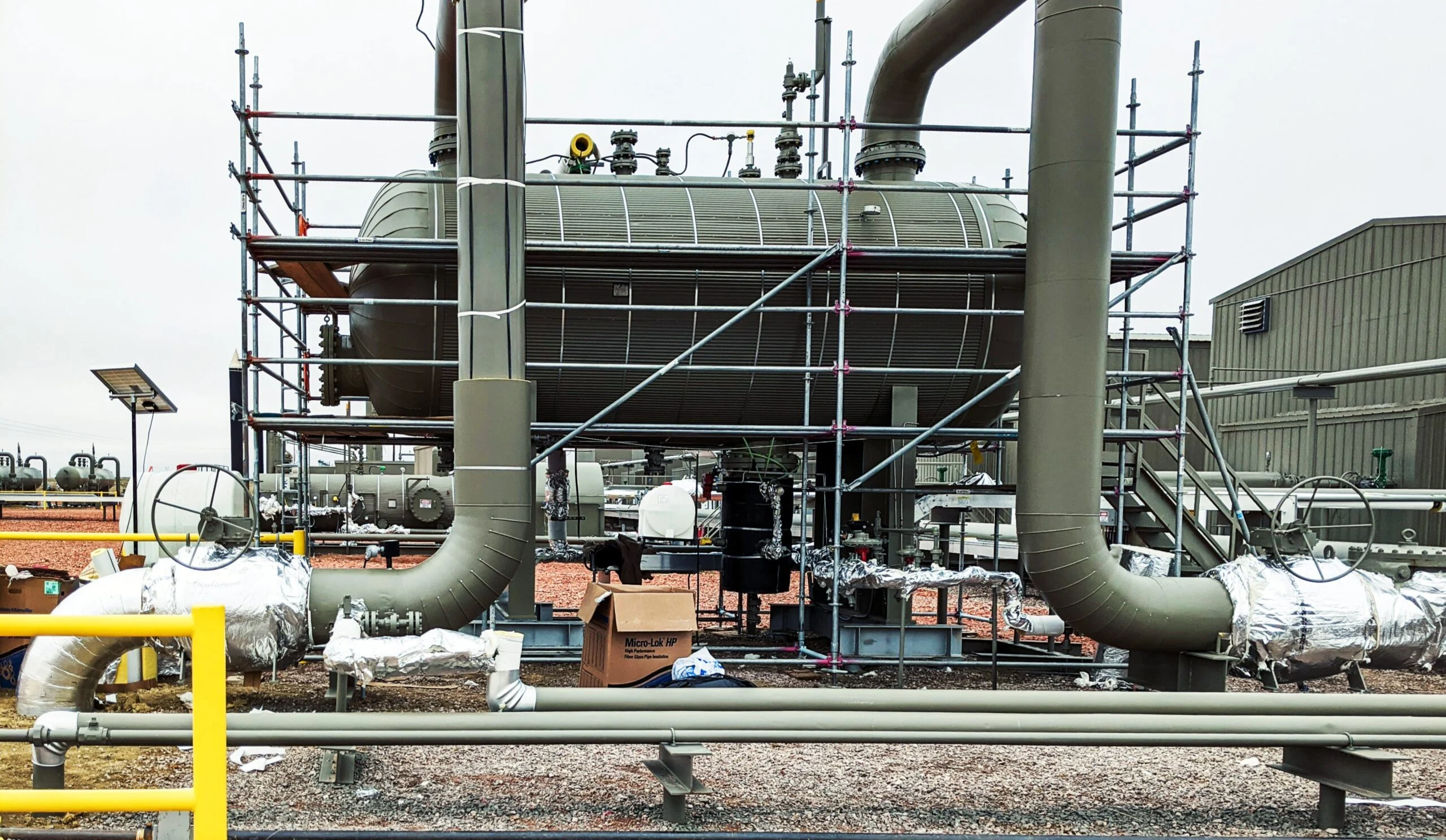
One innovative solution we have implemented is to use a Low Pressure (LP) Separator to manage liquids leaving the slug catcher. The LP Separator acts as an intermediate stopping point, preventing flow directly into atmospheric tanks. By degassing the slug catcher liquids in the LP Separator, the flash vapors are directed to a Vapor Recovery Unit (VRU), reducing methane emissions on the facility.
This dual action:
Protects the tanks in the unlikely event of a control valve failure, and
Improves emissions reduction and enhances overall site reliability.
How Vapor Recovery Units (VRUs) Reduce Methane Emissions in Compressor Stations
Directing vapors from the LP Separator to the VRU plays a crucial role in improved VRU performance, thus reducing methane emissions. According to the EPA, Vapor Recovery Units are a proven method for capturing vented methane and reducing emissions from LP gas sources like compressor stations or storage tanks. This recovery supports environmental compliance, such as OOOO(b), and improves the overall efficiency by reducing product losses. In an industry where both safety and environmental stewardship are paramount, this strategy represents a win-win scenario for compressor station design.
This is a practical solution that checks two important boxes at once in compressor station design:
Protecting your people and equipment, and
Keeping emissions in check.
Overcoming Limitations of Coalescers with High Pressure Separation
In addition to LP Separators, CANUSA EPC’s engineering approach advocates for the use of a High Pressure (HP) Separator downstream of gas compression, yet upstream of the coalescer. Coalescers are traditionally used for gas/liquid separation; however, they’re not ideally suited for separating hydrocarbon liquids from water. Liquids are more efficiently removed when incorporating an independent HP separator into the process. Through separating high-pressure hydrocarbon liquids from water before they reach the coalescer, the HP separator will provide value through three key aspects:
Eliminates bulk liquid separation at coalescer
Improves separation efficiency
Extends the life of the coalescer
Preventing Hydrate Formation in Drain Systems
An important benefit of the HP Separator is its capacity to use separate drains for water and hydrocarbons. There is an increased risk of hydrate or ice formation when high-pressure fluids are discharged into a comingled line – this can cause costly blockages and potential safety incidents. The risk of hydrate formation is mitigated by directing water and hydrocarbon drain streams back to the inlet slug catcher via individual lines.
Driving Industry Reliability and Best Practices
The use of low-pressure and high-pressure separators in compressor stations represents the evolution of best practices for compressor systems and compressor station design. At CANUSA EPC, our designs incorporate integrated safety and efficiency best practices. By revising outdated practices, such as direct draining from slug catchers, we protect atmospheric storage tanks while improving liquid management and emissions reduction performance. These process engineering design principles enhance safety, reduce downtime, and decrease emissions in an increasingly cost-sensitive industry.
Key Takeaways: Improving Compressor Station Design for Safer Liquid Management
Innovation in compressor station design is vital for meeting today’s rigorous safety and environmental standards. Incorporation of LP and HP separators in compressor system designs demonstrates how thoughtful engineering can directly impact reliability, operational excellence, and environmental compliance.
We look forward to exploring further advancements, from automated control systems to predictive maintenance technologies, that will shape the future of compressor station operations. As the oil and gas industry continues to evolve, the pursuit of smarter, more resilient designs will remain at the forefront of our efforts.
Gas compression facilities in the USA must adapt to the EPA’s latest methane regulations (Final Rule1), Subpart OOOO(b), which mandate significant reductions in methane emissions from key equipment. Executing emission reduction projects presents opportunities to leverage a strategic approach to engineering, procurement, and construction (EPC) to maintain cost efficiency.
What is OOOO(b) Compliance?
The EPA’s OOOO(b) Rule is a major regulatory update aimed at curbing methane emissions from oil and gas operations. The EPA’s Rule mandates “strict performance standards for new, modified, and reconstructed sources”.
For gas compression facilities, compliance requires a shift in operational practices. There are three distinct applications that apply:
Process Controllers & Pneumatic Pumps – Natural gas-driven controllers and pneumatic pumps, which historically vented methane into the atmosphere, must be replaced with zero-emission alternatives (IE. instrument air-driven controllers).
Dry Seals for Compressors – Dry-seal centrifugal compressors must maintain a volumetric flow rate at or below 10 standard cubic feet per minute (scfm) per compressor seal to minimize emissions.
Storage Vessels/Tank Batteries – Storage tanks at compression stations must now achieve a 95% reduction in methane and VOC emissions, significantly changing how operators manage emissions control systems.
Compliance Dates with EPA 40 CFR Part 60, Subpart OOOO?
Originally published in December 2023, EPA’s Final Rule(1) provided lead time for industry to comply. This subpart establishes emission standards and compliance schedules for the control of volatile organic compounds (VOC) and sulfur dioxide (SO2) emissions from affected oil and gas facilities that commence construction, modification, or reconstruction after December 6, 2022.
Compliance with the new performance standards is stated in section 60.5370b2. “You must be in compliance with the standards of this subpart no later than May 7, 2024, or upon initial startup, whichever date is later, except as specified per….”
This deadline has forced operators to focus on upgrades in an accelerated manner. With the right plan in place, you can realize cost savings and operational efficiencies.
Instrument Air Conversions: Save Time & Money
Converting from instrument gas to instrument air across multiple sites is a capital-intensive process. In a recent methane reduction project, CANUSA EPC achieved substantial cost savings and accelerated schedule for their operator using these strategies.
Develop a Compliance Program Team
Project Manager, Josh Hoeft, explains “the most cost-effective approach is to develop a Compliance Program – a structured, regional approach where you select a preferred EPC firm, issue a bulk order on IA package for volume discounting and guaranteed delivery schedules, and contract a regional construction firm familiar with the sites. This eliminates redundancies, reduces costs, and streamlines your path to compliance.”
Template-Based Engineering
“Experienced EPCs should be utilizing a template-based approach to engineering – a copy-paste design format across facilities. This approach:
expedites execution,
minimizes engineering re-work, and
ensures uniformity in documentation for installation
At CANUSA EPC, we’ve realized reduced engineering costs by up to 25% per site when we execute a Compliance Program on multiple sites (as compared to a single site),” says Hoeft.
Package Negotiations
Bulk procurement of IA systems can result in total project cost reductions of 10%. A Compliance Program recognizes savings on the purchase price of equipment, and the schedule for delivery can also be staggered – allowing the engineering and construction team to streamline their engagements to reduce demobilization costs.
Lessons learned from the first or second installation are incorporated into the execution plan. Every future installation becomes more efficient, creating a ‘snowball effect’. When executing multiple sites concurrently, you do not realize these benefits.
Single-Sourced Contractor
Having a dedicated contractor on multiple sites will improve efficiencies for scope development and allow the contractor to remove risk from their estimates, resulting in site costs that finish on budget. Contractors can develop a plan to support operations and minimize downtime, which often is the largest cost for these compliance projects – missed operating revenue.
OOOO(b) Planning & Operational Efficiencies
From past compliance projects, CANUSA EPC has found critical execution aspects that impact schedule and add risk to project costs.
Engaging Utilities Early
Electrical power capacity and availability must be analyzed early. This determines whether the existing electrical infrastructure (on site and from the utility) can accommodate the new loads required for OOOO(b) projects.
Electrical utilities are often backlogged. Requesting new/upgraded services or electrical equipment, like transformers, can result in long and unexpected lead items. It can take several months for the local power provider to run a new power line or install a new bucket transformer if the utility is the limiting factor.
Engaging utilities early in the design process can prevent significant delays.
Involve Site Operations in Design
From an engineering perspective, early and continuous engagement with operations personnel is critical. Facility staff possess in-depth knowledge of site-specific factors – existing infrastructure, space constraints, and potential integration challenges. Their input optimizes pipe routing, equipment placement, and ensures IA systems are designed with future facility expansions in mind.
Since operators are responsible for routine inspections and emissions monitoring, their early input ensures new systems are both practical and sustainable.
If your EPC is not involving your operations team from the outset, you may lose foresight on site functionality, long-term maintenance, and accessibility. Collaboration also helps your EPC understand operational priorities, reducing the risk of installing systems that require extensive modifications after deployment.
Planning for Reduced Downtime and Increased Reliability
Facility outages and prolonged downtime affect your bottom line. Engaging operations will plan for final mechanical tie ins and reduce facility downtime. On-site staff are knowledgeable about which equipment is critical for continued operation and can provide tie in plans that may avoid a facility shutdown.
If electrical tie ins require energy isolation, affecting critical equipment like the station PLC, developing a temporary power plan using a generator can be a viable option to keep the station running during the tie ins.
Abnormal operation of natural gas facilities – during start-ups and shutdowns – present the most hazardous operating scenarios when compared to steady state operation. Avoiding facility shutdowns altogether helps mitigate unsafe operating conditions.
Long-Term Benefits and Regulatory Compliance
For gas compression facilities, the implementation of OOOO(b) compliance measures satisfies regulatory requirements and creates opportunities for operational efficiencies. Companies that invest in structured IG-to-IA conversion programs, bulk material procurement, and standardized engineering designs will benefit from reduced compliance costs, improved environmental performance, and increased asset reliability.
Moving Forward with Compliance
Are you confident about what deadlines apply to your facilities?
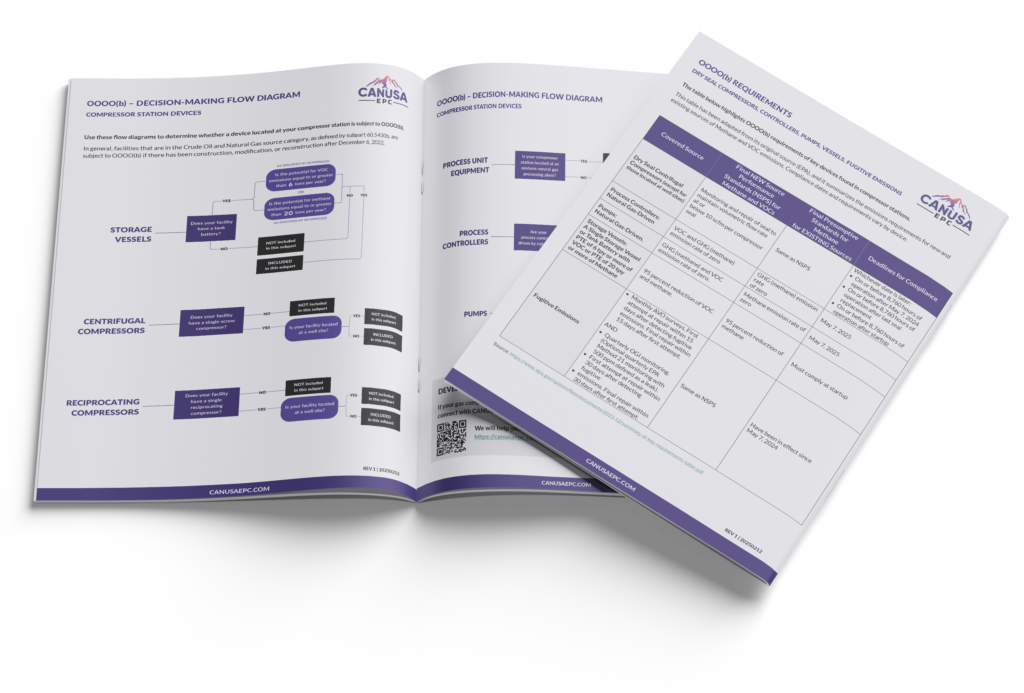
CANUSA EPC has created a OOOO(b) Guide to help you gain clarity on what EPA Methane Rules apply to your compression operations.
Simplified EPA Matrix focusing only on dry seals, pumps, storage vessels, fugitive emissions, and process controllers.
Decision-making diagrams to guide you on what OOOO(b) sub-rules are pertinent – dry seal venting of centrifugal compressors, gas pneumatic devices, fugitive emissions, storage vessel, and pumps.
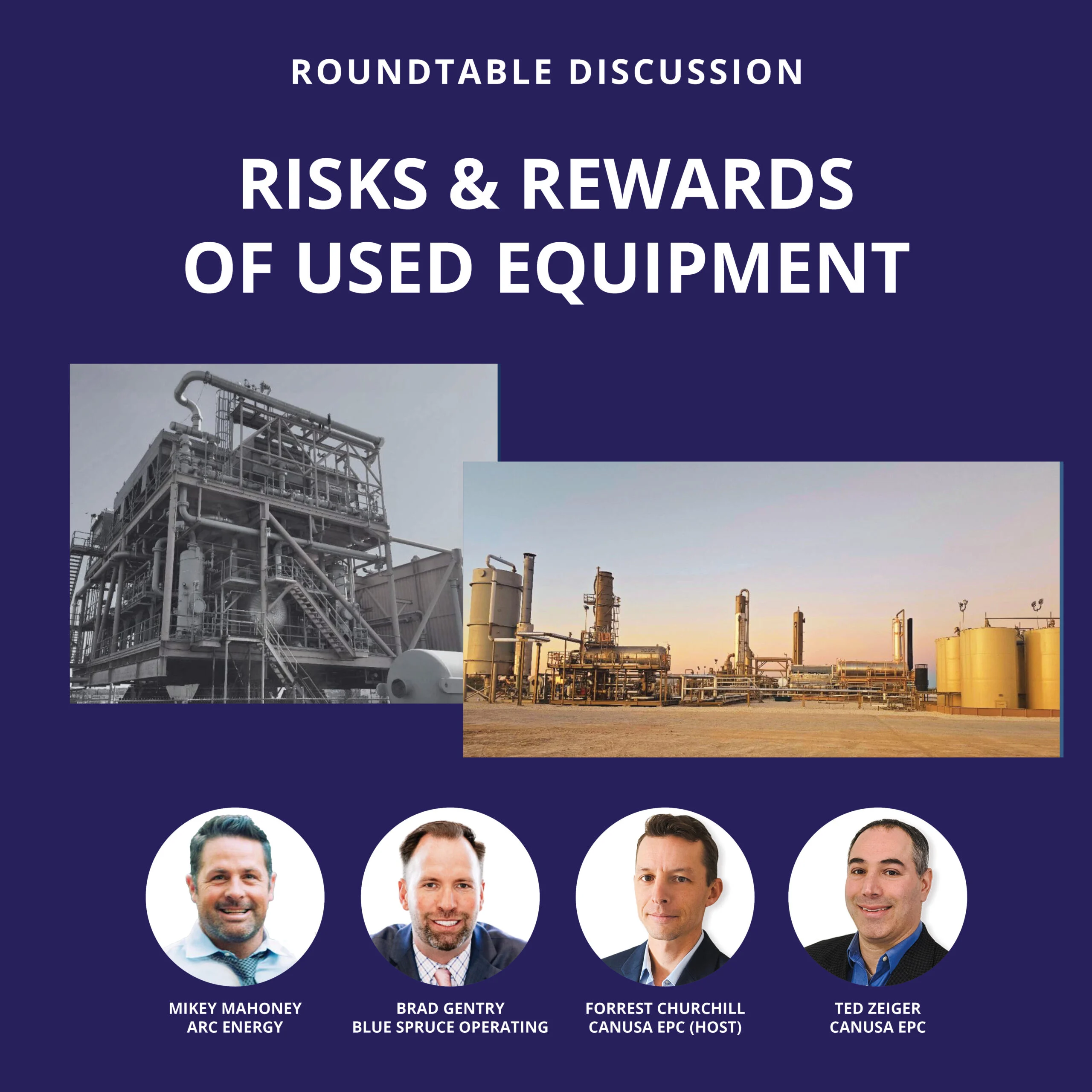
Repurposing used or reconditioned equipment can expedite schedules and reduce costs; it can also cause drastic problems if not executed correctly. We assembled an expert panel to answer all of your questions on leveraging used equipment. Topics covered: mechanical integrity approaches, key evaluation metrics, considerations for the impact of reconditioning equipment for PSM programs, and more.