Tania Grimes, PMP | Project Manager, CANUSA EPC
Introduction
A project does not need every question answered before engineering can move forward. It does, however, need the right questions answered at the right time.
Many project challenges that surface during detailed engineering, procurement, or construction can be traced back to decisions made much earlier, when an assumption was treated as fact, a project boundary remained unclear, or an estimate was expected to provide more confidence than the available definition could support.
During early project development, owners and their engineers are often required to establish initial scope, evaluate technical options, and develop a credible capital outlook while important information is still evolving.
Asking ‘which uncertainties have the potential to materially change a project?’ is the heart of effective project definition. The objective should not be to eliminate uncertainty, but rather to establish enough clarity around the issues that matter for the project to move forward on a sound basis.
Alignment Comes Before Engineering
Most projects begin with a business need, not an engineering deliverable.
An owner may need to increase processing capacity, debottleneck an existing facility, accommodate changing operating conditions or determine whether an investment is economically viable. The engineering objective is therefore not simply to produce deliverables, but to develop the technical definition needed to help the owner make those decisions.
Before advancing the solution, the owner and engineering team should align on some fundamental questions:
- What problem are we trying to solve?
- What does success look like?
- What is each party responsible for delivering?
From there, alignment needs to extend into the design basis, project boundaries, assumptions, deliverables, review processes and decision points.
This sounds straightforward, but it establishes an important boundary around the work.
A project team can spend considerable effort developing something that is technically sound while still failing to address the owner’s actual decision. Conversely, a relatively small amount of targeted engineering can sometimes resolve the issue preventing a project from moving forward.
Aligning on expectations early does more than improve communication. It reduces the likelihood that engineering advances on a basis that later has to be reconsidered, helping avoid unnecessary rework as the project develops.
Clear alignment also provides the owner and engineering team with a common basis for evaluating new information, changes, and decisions throughout the performance of work.
Focus Definition Where It Can Change the Outcome
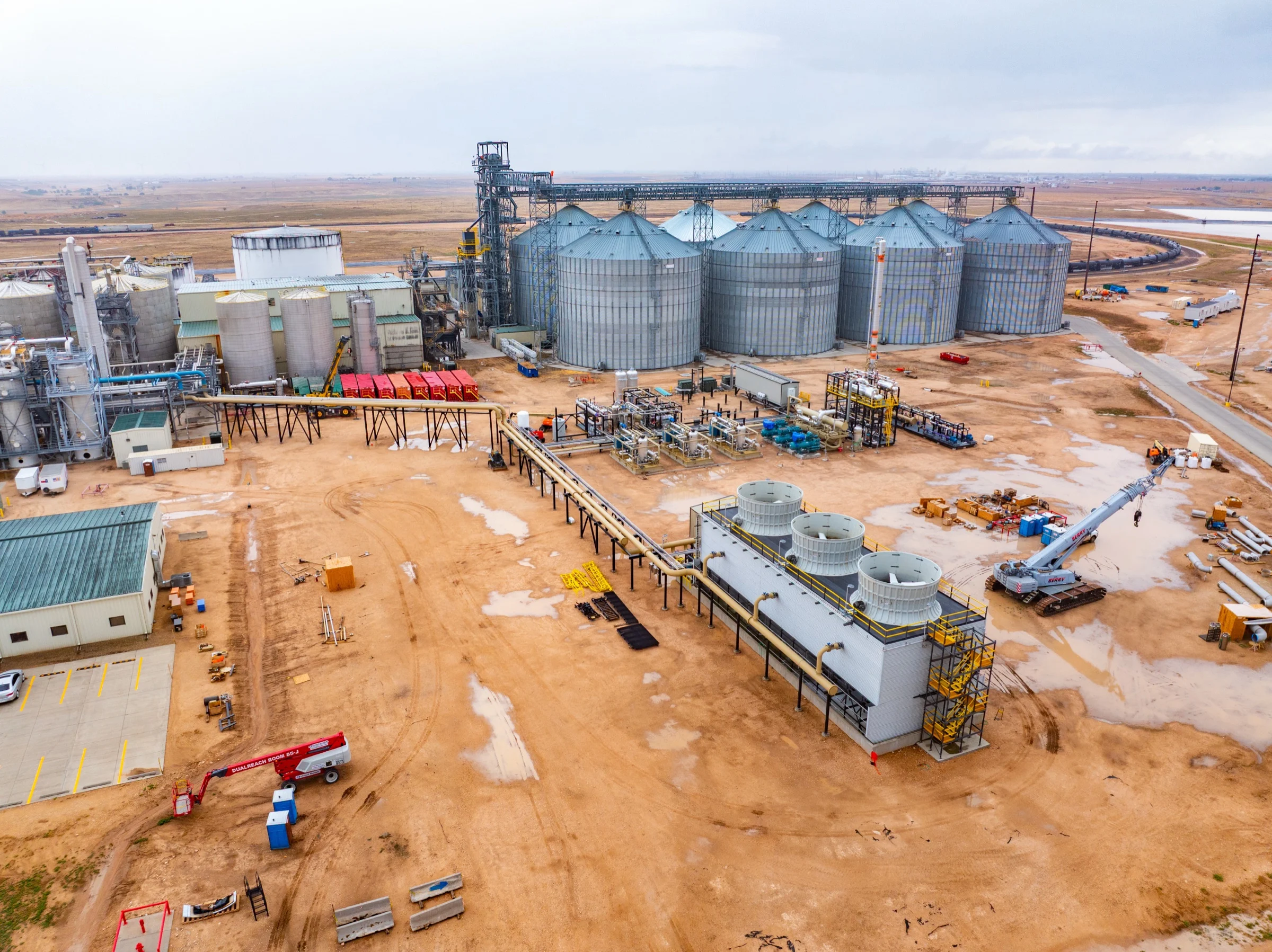
A recent CANUSA EPC cryogenic gas processing project illustrates the value of focusing on critical scopes that impact decision-making.
The facility involved compression, gas processing, amine treating, dehydration and stabilization, together with consideration for future expansion. The challenge was not simply determining how to engineer those systems. The team also needed to understand the operating and compositional data behind the design and what the facility realistically required to process in the future.
Too little capacity would constrain future operations. Too much capacity would add capital cost for capability that may never be required. Getting that balance right required understanding not only the facility, but also the assumptions behind future production, operating conditions and the owner’s business objectives.
The important distinction was between uncertainties that could fundamentally alter the facility design and those that could be accommodated as engineering progressed. If a future operating case materially changed equipment sizing, plot space or major utility requirements, it warranted additional definition early. If an uncertainty did not materially change the facility configuration, resolving it immediately offered considerably less value.
More engineering is not automatically better engineering. Additional definition creates the greatest value when it resolves something consequential to the decision being made.
The same principle applies when working with assumptions. Production forecasts, feed composition, operating envelopes, and existing facility conditions can all influence the resulting design. When reliable information is not yet available, a useful way to test an assumption is to consider the consequence of being wrong:
- Would the equipment selection change?
- Would the facility retain sufficient flexibility?
- Could the condition be accommodated later without significant redesign?
- Could it materially affect capital cost?
If the answer materially changes the project, the assumption deserves attention before the affected decision is made. If it does not, additional definition may provide little incremental value at that stage.
Cost Confidence Has to Be Earned
The relationship between information and decision-making becomes particularly important when discussing project cost. Owners understandably want to know what a proposed project will cost, and as a project moves closer to an investment decision, expectations for greater cost confidence also increase.
Greater estimate confidence, however, requires greater project definition.
Process data, equipment selections, vendor information, quantities, existing-facility documentation and engineering development all contribute to the maturity of an estimate. As those inputs improve, the project team gains a stronger basis from which to define cost.
AACE International classifies estimates from Class 5 through Class 1, using the maturity of project-definition deliverables as the primary basis for classification. Expected estimate accuracy generally improves as project definition matures, although other project- and estimate-specific factors also influence the resulting range.
The practical implication is important.
When more cost confidence is required, the next question should not automatically be, “How do we make the estimate more accurate?” Instead, the disciplined approach is to ask, “What additional project definition would materially improve the estimate basis?” That question turns estimating from an exercise in refining a number into a discussion about the information needed to support that number.
Depending on the project, that could mean advancing process engineering, obtaining firmer vendor information, confirming existing facility conditions or resolving an operating assumption that influences equipment selection.
Conversely, an early estimate can be entirely appropriate if it supports the decision for which it was developed and its limitations are understood.
Success in project cost estimating is not simply about producing a budget. It is about ensuring that decision-makers understand what the budget represents.
FEED Should Reduce the Uncertainty That Matters
Front-end engineering design (FEED) brings these ideas together.
A successful FEED produces engineering deliverables, but the deliverables themselves are not the ultimate objective. Their value lies in improving the definition needed to make the next project decisions. For example:
- A process simulation can resolve an operating question;
- Vendor information can strengthen equipment definition and the cost basis;
- Site investigation can replace an assumption about an existing facility with better information; and
- Design reviews can expose differences in expectations before they become embedded in detailed engineering.
In each case, engineering is creating value by reducing a specific area of uncertainty.
The goal is not to advance every aspect of a project to the same level of maturity. FEED should concentrate effort where additional definition changes a decision, reduces material uncertainty, or strengthens the basis for execution.
By the end of the work, the owner should have a clearer understanding of the project’s technical basis, the assumptions supporting the design, the consequential uncertainties that remain, and the appropriate level of confidence to place in the estimate.
Conclusion
Better project definition does not require every unknown to be eliminated. It requires the owner and engineering team to understand which assumptions can materially influence scope, cost, capacity and execution, and to address them before the decisions they affect are made.
Successful project execution starts with clarity, and clarity starts with the conversations that happen before detailed engineering begins.
Start a Conversation with CANUSA EPC
If your team is developing a FEED scope, evaluating a brownfield modification, or determining what level of engineering is needed before an investment decision, CANUSA EPC can help identify the assumptions and uncertainties most likely to influence scope, cost and execution. Start a conversation with our team about where additional project definition can create the most value.