The client’s industrial facility was in a remote location, and it was desired to operate the facility with renewable energy. Onsite power generation was required to generate upwards of 500 kW of demand during peak startup. Prior to the renewable power system coming online, CANUSA EPC also provided a temporary power system. The final microgrid solution needed to accommodate tie in planning for the existing generators as backup units.
The Solution
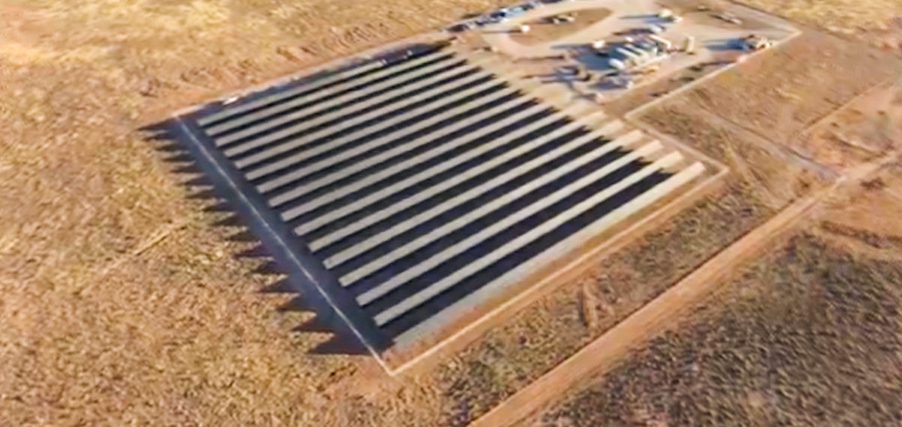
CANUSA EPC worked with the Client to develop a plan to start the facility on natural gas generated power and then cut over to a solar power generation system coupled with a battery energy storage system. The end state of the facility would be a microgrid system consisting of a 3500-panel solar farm capable of producing 1.6MW of power, a 4MWh energy storage system, and a 1MW of backup generator to provide clean energy to the industrial plant.
To reduce construction costs, the project was executed with various direct technology providers to secure the lowest cost for the microgrid system. Sourcing included generators, power distribution buildings, solar arrays, energy storage, and a microgrid controller. The client entrusted CANUSA EPC to coordinate and manage all involved parties to produce a cohesive microgrid system. Our team reviewed all procured equipment and provided a complete electrical package for microgrid construction.
Trenching details
Major equipment specification
Procurement support
One-line development
Network architecture
Cable sizing
PDC review
Electrical plot plans
The Results
CANUSA EPC managed multiple vendors to implement a microgrid system for the remote helium processing plant.
Energy storage system will power the facility for 13.5 hours with no additional power generation, allowing the facility to operate mostly on solar power.
Embedded microgrid controller in the PDC building will switch to natural gas-powered generators in scenarios where the solar farm and energy storage unit are in a deficit.
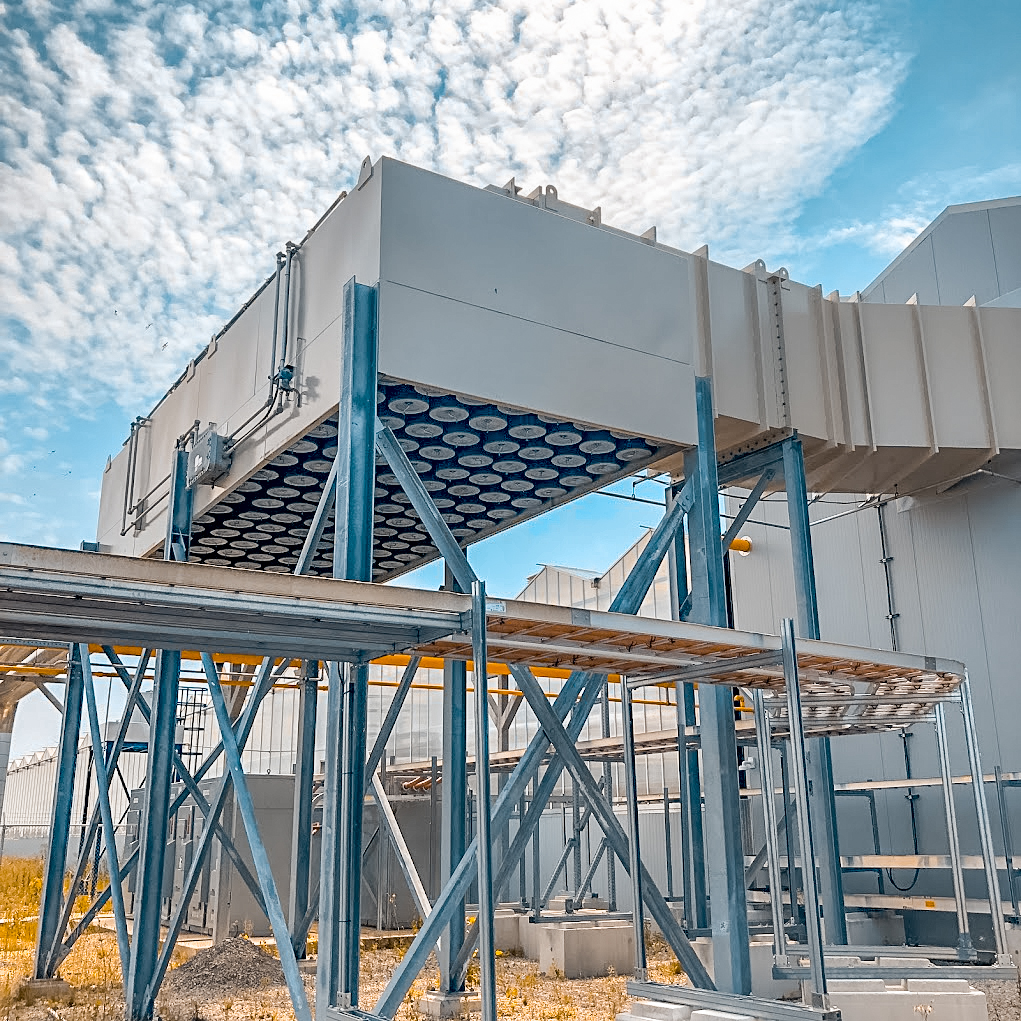
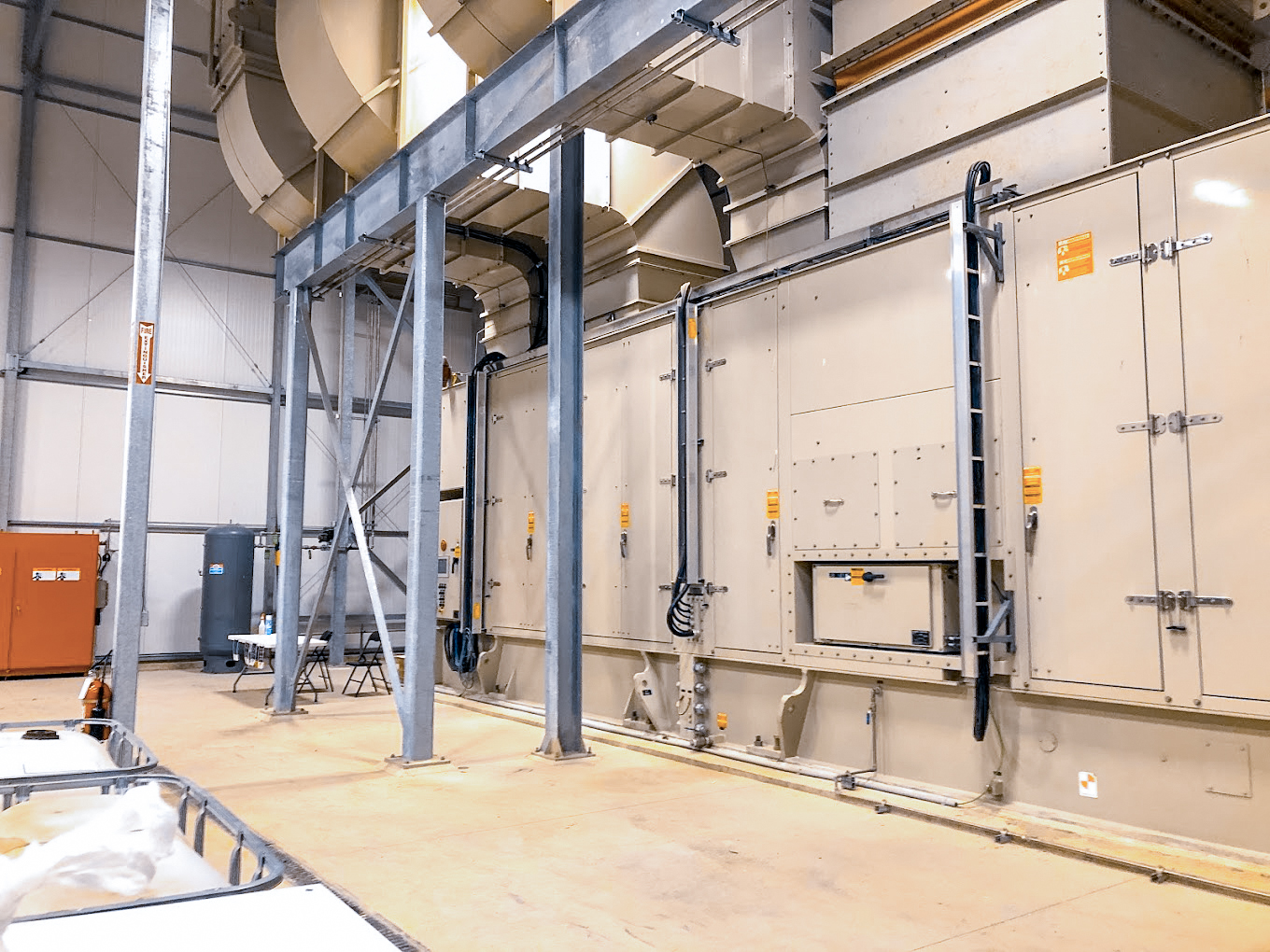
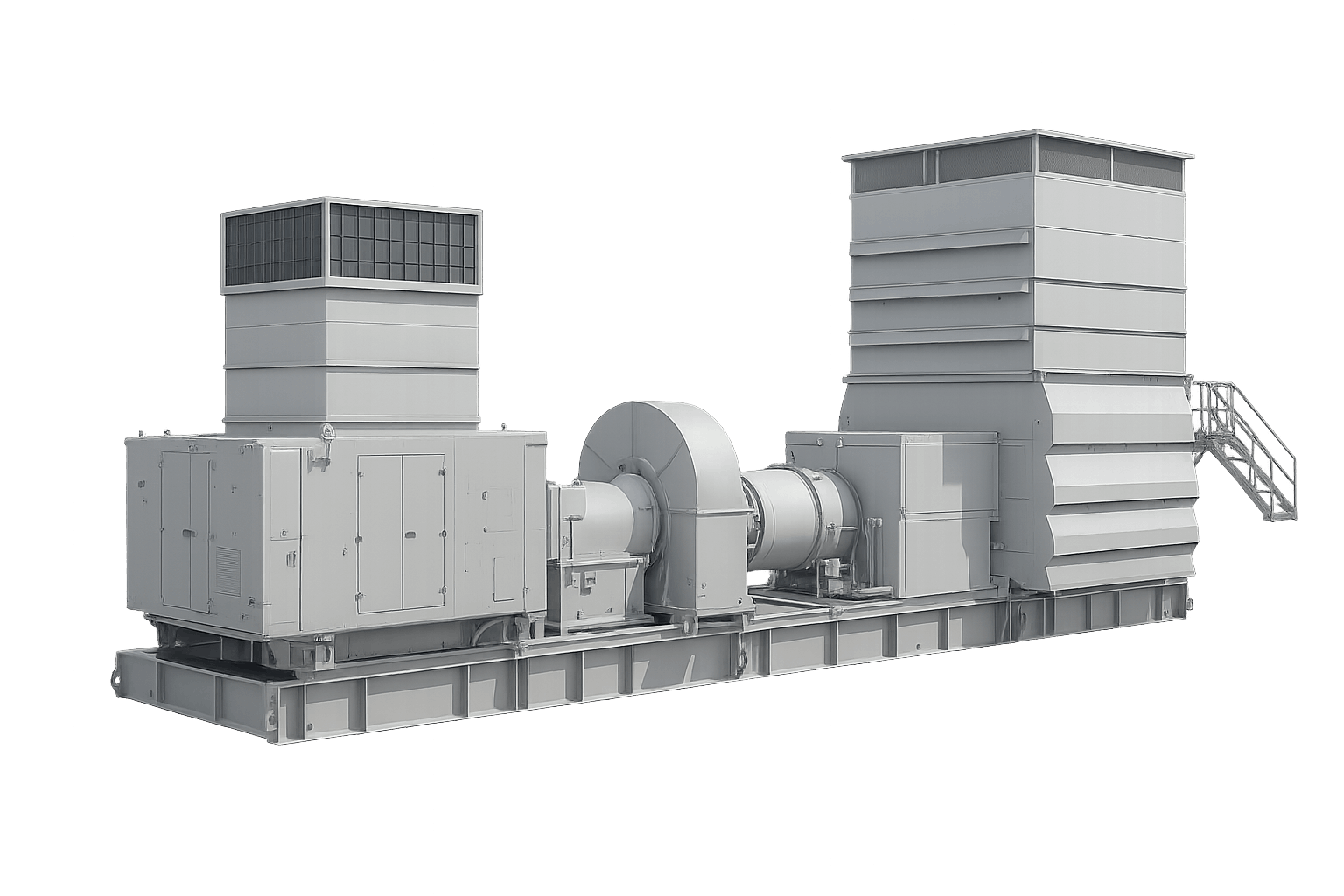
The client was interested in implementing a field power generation facility consisting of 1 turbine and 10 Waukesha generators including flare mitigation, utilizing 2 MRUs (Mechanical Refrigeration Unit) to make use of stranded production gas. CANUSA EPC was tasked with the inlet mechanical design, electrical design, and engineering involved in creating the facility.
The Solution
CANUSA EPC developed a design basis and schedule to meet client timelines. A site visit was conducted to the client yard to gather data on existing switchgear and motor control systems to be re-utilized in the facility. Our team’s construction design and engineering scope included the following:
Facility site plan
Facility balance of plant engineering
PHA report
Piping design of inlet gas distribution and bill of materials
Foundation drawings for the turbine package and pipe racks
Electrical system design with 4160V and 480V
Arc flash study
The Results
Facility brings 31.5 MW of energy from a 12 MMSCFD inlet feed.
Designed for a combined inlet 12 MMSCFD natural gas inlet (8 MMSCFD residue gas and 4 MMSCFD raw gas)
Average power output of 31.5 MW (17.5 MW from the Waukesha generators and 14MW from the turbine)
Facility was designed for the future use of two MRUs to allow for increased liquid recoveries
Explore how surging U.S. electricity demand and record-breaking capacity market signals, like PJM’s $67 billion wake-up call, are reshaping the next generation of industrial energy infrastructure projects across North America. Examine key projects developing behind the meter facility and utility projects and the market forces driving unprecedented investment in onsite power generation, natural gas processing, and energy facility development. The Energy by Design presentation delivers actionable insights for energy professionals navigating the evolving power landscape.
In January 2026, the U.S. Environmental Protection Agency finalized long-awaited updates to the New Source Performance Standards (NSPS) for stationary combustion turbines—marking the first major revision since 2006. With power generation developers increasingly dependent on flexible, rapid-deployment solutions such as temporary turbines and trailer-mounted generation, these changes bring important implications for project scheduling, emissions compliance, and technology selection.
This blog outlines what has changed, how the new temporary turbine subcategory works, and what developers should consider as they plan new installations or short-term power solutions.
Updated NOx Standards for Modern Turbines
The EPA’s final rule restructures emissions requirements by grouping turbines into subcategories based on:
Heat input (MMBtu/hr)
Thermal efficiency (≥38% or <38%)
Expected utilization (12-month capacity factor)
Fuel type and load conditions
The changes align emissions expectations with what modern combustion controls and SCR technology can realistically achieve.
Key NOx Standard Revisions
Large, high-utilization turbines (>850 MMBtu/hr, >45% CF) must now meet single-digit NOx emissions using combustion controls + SCR.
Medium and small turbines retain combustion-controls-only pathways with updated ppm limits.
Natural gas remains the basis for hourly emissions performance.
SO₂ standards remain unchanged, with more flexible compliance options.
For developers, these updates will influence technology specifications, EPC execution planning, and permitting timelines.
The New Temporary Turbine Subcategory
The 2026 rule introduces a dedicated regulatory framework for stationary temporary combustion turbines, addressing an industry need for short-term, flexible power during outages, commissioning, construction sequencing, or emergency support.
Key Features of the Temporary Turbine Category
Applies to turbines up to 850 MMBtu/hr
Limited to 24 months at a given location
NOx standard: 25 ppm using combustion controls only
Reduced monitoring and recordkeeping
Exempts certain portable Title II-covered engines
Prevents “serial swapping” to extend temporary status
This category enables faster, more efficient deployment of turbine temporary power and trailer-mounted power generation systems—without excessive compliance burden.
MW Output Estimates Based on EPA Heat Input Categories
Because EPA regulates turbines by heat input (MMBtu/hr), developers often need a practical translation into MW output. Using typical turbine thermal efficiencies, here is a rough guide:
Turbine Category
Heat Input
Efficiency
Approx. MW Output
Large
>850 MMBtu/hr
≥38%
~95 MW
Medium
50–850 MMBtu/hr
≥38%
5–95 MW
Small
≤50 MMBtu/hr
30–38%
4–6 MW
Temporary Turbines
≤850 MMBtu/hr
30–38%
5–95 MW
These estimates help developers size temporary solutions and anticipate the emissions requirements tied to turbine selection.
Economic and Project Delivery Implications
According to EPA’s Economic Impact Analysis, the updated rule is expected to:
Reduce annual NOx emissions by up to 296 tons by 2032
Save industry up to $87 million over eight years
Focus SCR deployment only on large, high-duty units where it is cost-justified
For developers, this results in:
Lower capital costs for many turbine classes
Continued viability of non-SCR combustion turbines
Streamlined permitting for temporary deployments
Enhanced flexibility in project scheduling and outage planning
The regulatory environment now better supports short-term and contingency power solutions.
What Developers and Turbine Representatives Should Do Now
1. Assess Turbine Classification Early
Efficiency, utilization, and heat input now directly determine regulatory requirements.
2. Factor in Temporary Power Strategy
Temporary turbines provide cost-effective coverage for outages, interconnection delays, and commissioning.
3. Coordinate with OEMs and EPC Partners
Thermal efficiency thresholds and NOx limits influence model selection and long-term operating strategy.
4. Review Documentation Requirements
Temporary status requires manufacturer certification and periodic (five-year) testing records.
Conclusion
The EPA’s updated NOx standards significantly modernize the emissions landscape for new and modified turbines. For developers and OEM representatives, the changes reinforce the need to plan turbine selection and temporary power strategies early in the project lifecycle. With the introduction of the temporary turbine subcategory, the industry gains a more flexible, streamlined path for meeting both short-term and long-term power generation needs.
If you need support navigating the new NOx standards, evaluating turbine options, or planning temporary generation during outages and construction, our team is here to help you develop a compliant and cost-effective strategy.
As industrial demand continues to rise, staying informed about power generation trends, utility planning, and scalable energy systems has never been more important. At CANUSA EPC, we believe knowledge sharing is essential for building reliable and future-ready energy infrastructure.
Our 2026 Conference Recommendations spotlight top industry events that explore the latest advancements in:
Onsite and utility-scale power generation
Power system response for large-scale projects
Regulatory trends and emissions requirements
We’ve also included expert picks from Xentric, an engineering firm focused on the distribution and transmission systems that support the grid deployments.
Understanding Alberta’s Industrial Power Landscape for the Next 20 Years.
How can industrial facilities stay ahead as power demand, electrification trends, and emissions regulations continue to evolve? This presentation, originally shared at APEGA 2025, examines the intersection of power planning, cost pressures, and regulatory expectations in Alberta and beyond.
Download the Industrial Power Distribution presentation to explore:
Projected power demand growth in Alberta under Reference vs. High Electrification scenarios (1.2%/yr vs. ~45% increase by 2043)
The impact of demand on cost per kWh, including capital investment implications
Emissions-reduction strategies needed to meet layered regulatory requirements
Natural gas generation outlook and where it fits in the evolving power mix
Planning considerations for scalable, flexible industrial facility power systems
This presentation is ideal for facility planners, energy infrastructure developers, and ESG leaders seeking to understand how demand and regulatory expectations will influence future power costs, project timelines, and infrastructure strategies