The Client was venting excessive vapors from their produced water tank battery due to higher operating pressure in their inlet separator. Operations had determined that the pressure drop between the slug catcher and the storage tank was resulting in entrained gas venting above OOOO(b) limits.
The Solution
CANUSA EPC provided engineering and design to install an emission control device. An intermediate knockout drum and combustor were added to the facility. Liquids were routed from the slug catcher to the lower-pressure intermediate knockout, allowing more gases to flash off before sending the remaining liquids to the water tanks. All flashed gases were sent to the combustor.
Engineering
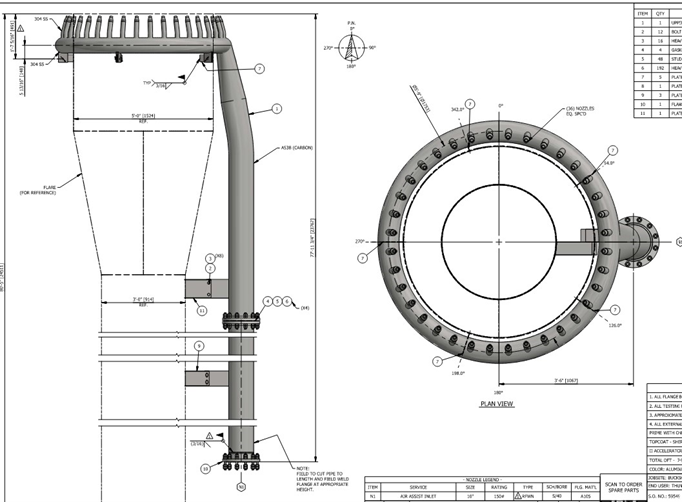
Flare specification
Re-purposed knockout drum evaluation
Instrumentation and control systems added
Saddle design and flare guy wire anchoring solution
Design
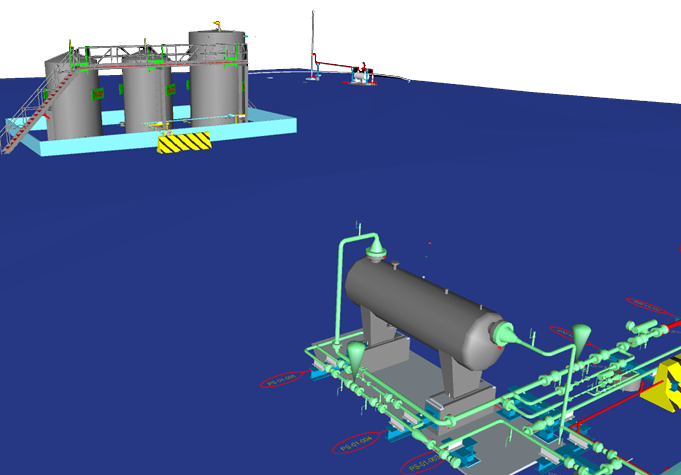
3D Modeling of piping, structural steel, and foundations
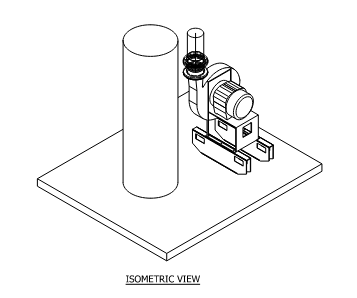
Piping isometrics
Pipe support and foundation details
The Results
Reduction in vented vapors from the tank battery
Reduced direct venting methane by 10 TPY
Alternative solution for recycle of entrained gas to inlet
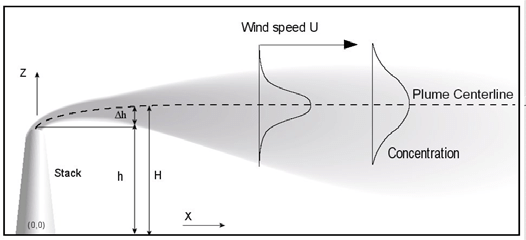
The Client was experiencing shutdown trips in their amine processing area from hydrogen sulfide sensors due to increased H2S in the inlet gas. During calm ambient conditions (e.g. no wind), the gas from the vent stack can migrate to grade and present safety concerns for the onsite operators and exceed the NIOSH REL and OSHA PEL 10-minute exposure limits.
The Solution
CANUSA EPC evaluated various options from thermal oxidizers, vent stack blowers, and H2S scavengers as solutions to reduce the instances where H2S was causing facility shutdowns. The solution selected was a modified blower vent tip system to increase the velocity of the exit gas to elevate the concentrated gas high enough to disperse to non-detectable levels by the time it reached safety sensors.
Engineering:
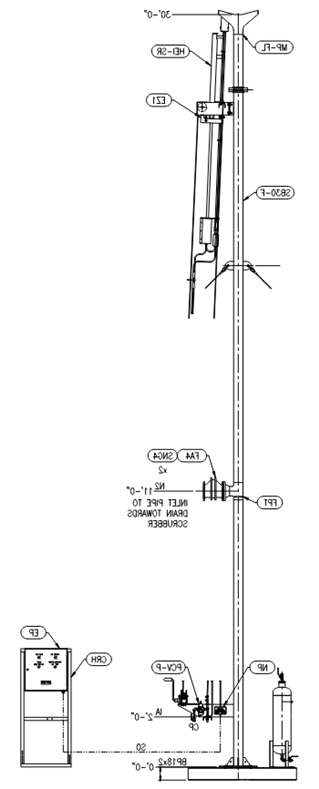
Blower specification
Dispersion modeling
Electrical system additions
Vent structural steel design for blower
Procurement:
VFD Specification
Blower package evaluation
Dispersion modeling
Construction package bids
The Results
Reduction in ground measurements of H2S exceeding the 20 ppm sensor shutdown
Reduced conditions where operators are exposed to H2S limits above OSHA
Mitigated instances of shutdown related to inadequate dispersion of H2S
In January 2026, the U.S. Environmental Protection Agency finalized long-awaited updates to the New Source Performance Standards (NSPS) for stationary combustion turbines—marking the first major revision since 2006. With power generation developers increasingly dependent on flexible, rapid-deployment solutions such as temporary turbines and trailer-mounted generation, these changes bring important implications for project scheduling, emissions compliance, and technology selection.
This blog outlines what has changed, how the new temporary turbine subcategory works, and what developers should consider as they plan new installations or short-term power solutions.
Updated NOx Standards for Modern Turbines
The EPA’s final rule restructures emissions requirements by grouping turbines into subcategories based on:
Heat input (MMBtu/hr)
Thermal efficiency (≥38% or <38%)
Expected utilization (12-month capacity factor)
Fuel type and load conditions
The changes align emissions expectations with what modern combustion controls and SCR technology can realistically achieve.
Key NOx Standard Revisions
Large, high-utilization turbines (>850 MMBtu/hr, >45% CF) must now meet single-digit NOx emissions using combustion controls + SCR.
Medium and small turbines retain combustion-controls-only pathways with updated ppm limits.
Natural gas remains the basis for hourly emissions performance.
SO₂ standards remain unchanged, with more flexible compliance options.
For developers, these updates will influence technology specifications, EPC execution planning, and permitting timelines.
The New Temporary Turbine Subcategory
The 2026 rule introduces a dedicated regulatory framework for stationary temporary combustion turbines, addressing an industry need for short-term, flexible power during outages, commissioning, construction sequencing, or emergency support.
Key Features of the Temporary Turbine Category
Applies to turbines up to 850 MMBtu/hr
Limited to 24 months at a given location
NOx standard: 25 ppm using combustion controls only
Reduced monitoring and recordkeeping
Exempts certain portable Title II-covered engines
Prevents “serial swapping” to extend temporary status
This category enables faster, more efficient deployment of turbine temporary power and trailer-mounted power generation systems—without excessive compliance burden.
MW Output Estimates Based on EPA Heat Input Categories
Because EPA regulates turbines by heat input (MMBtu/hr), developers often need a practical translation into MW output. Using typical turbine thermal efficiencies, here is a rough guide:
Turbine Category
Heat Input
Efficiency
Approx. MW Output
Large
>850 MMBtu/hr
≥38%
~95 MW
Medium
50–850 MMBtu/hr
≥38%
5–95 MW
Small
≤50 MMBtu/hr
30–38%
4–6 MW
Temporary Turbines
≤850 MMBtu/hr
30–38%
5–95 MW
These estimates help developers size temporary solutions and anticipate the emissions requirements tied to turbine selection.
Economic and Project Delivery Implications
According to EPA’s Economic Impact Analysis, the updated rule is expected to:
Reduce annual NOx emissions by up to 296 tons by 2032
Save industry up to $87 million over eight years
Focus SCR deployment only on large, high-duty units where it is cost-justified
For developers, this results in:
Lower capital costs for many turbine classes
Continued viability of non-SCR combustion turbines
Streamlined permitting for temporary deployments
Enhanced flexibility in project scheduling and outage planning
The regulatory environment now better supports short-term and contingency power solutions.
What Developers and Turbine Representatives Should Do Now
1. Assess Turbine Classification Early
Efficiency, utilization, and heat input now directly determine regulatory requirements.
2. Factor in Temporary Power Strategy
Temporary turbines provide cost-effective coverage for outages, interconnection delays, and commissioning.
3. Coordinate with OEMs and EPC Partners
Thermal efficiency thresholds and NOx limits influence model selection and long-term operating strategy.
4. Review Documentation Requirements
Temporary status requires manufacturer certification and periodic (five-year) testing records.
Conclusion
The EPA’s updated NOx standards significantly modernize the emissions landscape for new and modified turbines. For developers and OEM representatives, the changes reinforce the need to plan turbine selection and temporary power strategies early in the project lifecycle. With the introduction of the temporary turbine subcategory, the industry gains a more flexible, streamlined path for meeting both short-term and long-term power generation needs.
If you need support navigating the new NOx standards, evaluating turbine options, or planning temporary generation during outages and construction, our team is here to help you develop a compliant and cost-effective strategy.